Can fabrics have a Healing Frequency?
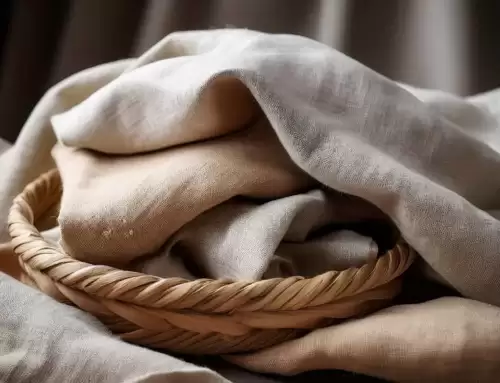
Mum would comment from time to time that her father used black linen cloth to wrap whatever was ailing him in it and he swore by it. I don’t remember seeing this magical stuff, but apparently black was the only colour available. He would have been much better off using white linen. Hospitals used to only use flax derived linen, but around the 1950’s changed to more synthetic cotton-polyester blends. Synthetic materials can trap static electricity, block airflow, and interfere with the body’s electromagnetic rhythm, potentially leading to symptoms like fatigue, irritability or a sense of energetic heaviness over time.
NB: The term ‘linen’ has become generic and refer to any type of fabric put on a bed. eg linen cupboard. All linen mentioned from here on will refer to the flax variety.
Some of the many toxic chemicals embedded in polyester are:
- Antimony: A known carcinogen (a substance that causes cancer). It’s often used as a catalyst during polyester production and can be released into the air and water.
- PFOA: A chemical used to make polyester waterproof. It’s been linked to cancer, thyroid disease, and reproductive issues.
- Formaldehyde: Often used as a finishing agent in polyester production. It’s an irritant that can cause respiratory issues and has also been linked to cancer.
- Perfluorochemicals (PFCs): Used to make polyester stain-resistant. These chemicals have been linked to a range of health issues.
Other issues with synthetic fabrics
- Researchers found that polyester and other synthetic fabrics can reduce sperm count in men.
- When worn next to the skin, these synthetic fabrics trap heat and create a warmer environment for the testicles.
- This can lower sperm production and even lead to infertility.
- Coming into contact with polyester can also impact our immune system.
- The fabric can trap sweat and bacteria against the skin, leading to irritation and infection.
- And because it doesn’t allow the skin to breathe, it can also lead to inflammation. Chronic inflammation has been linked to various health issues, including arthritis and heart disease.
What are some eco-friendly and non-toxic alternatives to polyester and other synthetic materials?
- Organic Cotton: Organic cotton is grown without toxic pesticides and harmful chemicals, making it a healthier option for both the environment and those wearing the fabric.
- Bamboo: Bamboo is a sustainable and fast-growing plant that you can make into soft, breathable fabric.
- Linen: Linen is made from flax plants, which require very little water and pesticides to grow. It’s also biodegradable and has the highest frequency/ benefits for the body.
- Hemp: Hemp is another sustainable plant-based fabric option that requires very little water and pesticides to grow. It’s also naturally anti-microbial and durable.
The Study
In 2003 a Jewish Doctor called Heidi Yellen conducted a study on the frequencies of fabric. The following is as close to source as I could find:
Tikkun Olam to Heal the World Wearing Flax
She used a device called the “Ag-Environ machine,” developed by Bob Graham. This machine was originally designed to measure the “signature frequency” outputs of plants and the human body. Graham’s research suggested that a healthier body exhibited higher frequencies, with a healthy human body measuring 100 and a severely diseased body measuring as low as 15Å.
Dr. Yellen extended this approach to examine the frequencies of various fabrics, and her reported findings were as follows:
| Fabric | Measured in Angstoms |
|---|---|
| Linen | 5000 Å |
| Wool | 5000 Å |
| Linen and wool mixed | 0 Å |
| Organic Unbleached Cotton | 100 Å |
| Standard bleached and coloured cotton | 40 Å |
| Bamboo derived Rayon | 15 Å |
| Rayon | 15 Å |
| Hemp | 100 Å |
| Silk | 15 Å |
| Polyester | 0 Å |
| Acrylic | 0 Å |
| Spandex | 0 Å |
| Lycra | 0 Å |
| Viscose | 0 Å |
| Nylon | 0 Å |
| Any black fabric | 0 Å |
An angstrom is a unit of length equal to 10−10 m; that is, one ten-billionth of a metre, 0.1 nanometre, or 100 picometres.