Work, Rest and Play
The job and sleep programs are closely related. Sleep disturbances can cause stress and stress can cause sleep disturbances. Our 24hr day is roughly divided into 8hrs work, 8hrs sleep and 8hrs for everything else.
Job
In this day and age it’s easy for our work/life balance to be stressful and out of balance. People leading a stressful working life often feel stuck on a treadmill. They may be in a situation where they have little opportunity to focus on their own needs and wants. External commitments may seem more important than their inner voice calling for a break or a change of direction. If this call is ignored for too long and if one‘s own limits are permanently exceeded, the body may adopt a “refusal attitude“ that can lead to the deactivation of entire functional areas. This in turn can lead to prolonged fatigue, exhaustion, sleep disruption and hypersensitivity.
Healy IMF applications are designed to provide valuable harmonisation of the Bioenergetic Field when leading an active professional life, offering programs for people leading a stressful everyday life.
- Activation (57 mins) – stimulates mental clarity, great before presentations
- Positive thoughts (45 mins) – orientates towards positive thoughts, great before job interviews
- Balance nerves (60 mins) – promotes calmness and promotion of the beta state
- Fatigue (60 mins) – reduces stress and balances energy
- Exhaustion systemic (60 mins) – balances adrenal hormones
- Exhaustion acute (20 mins) – promotes stress resistance and works with cranial stimulation (ear clips or sticky pads, not with coil)
- Extreme stress (60 mins) – mental and physical balance
My experience with activation is going from having a slightly foggy, dense head to being clear and sharp, like a windscreen being wiped cleaned.
Sleep
Sleep is vital for rest, repair and for our systems to process the day. The length of sleep needed for everyone is different, but averages around 7.5 hours per day. Children, pregnant women, adolescents and seniors many need more.
Sleep serves to regenerate the body and process the impressions of the day. Disturbed sleep can throw us off balance and even make us sick in the long run. Longer lasting sleep disturbances can lead to physical fatigue, health deficits and a weakening of the immune system. In addition, poor sleep quality can also have a negative emotional effect and strain our psyche.
Sleep disorders can also cause airways to block which leads to lapses in breathing during sleep and reduced oxygen in the blood. Our sleep cycles are about 90 mins long and change from light sleep > deep sleep > REM sleep and rotate into the start of the next cycle. In REM sleep our brains become highly active, our eyes move rapidly and we have vivid dreams. REM sleep is not just about dreaming – it’s crucial for our overall well-being.
Benefits of REM (Rapid Eye Movement)
- Memory Consolidation: REM sleep helps to process and store memories, making it easier for us to learn and retain information.
- Emotional Regulation: It plays a key role in managing our emotions, helping us wake up feeling balanced and less stressed.
- Brain Development: For children and young adults, REM sleep is essential for brain development and cognitive growth.
- Creativity Boost: Dreaming during REM sleep can inspire creativity and problem-solving skills.
Non-REM sleep
- Deep sleep – difficult to wake
- Body temperature drops, muscles relax and heart rate slows
- Memory consolidation and restorative functions
You can track your sleep states throughout the night with the Healy watch. Long term sleep disturbance can lead to physical fatigue, health deficits (weight gain, depression, dementia, heart disease, high blood pressure), a weakened immune system and emotional stress.
Sleep programs
The sleep programs are designed to harmonise the bioenergetic field, to quickly calm down after a long or stressful day and give you a restful nights sleep. Use before you go to sleep not while sleeping.
- Sleep systemic (51 min) – Optimises changing into delta state (deep sleep), use before bed
- Bed Rest (55 mins) – promotes relaxation and recovery, works with vagus nerve and enhances the parasympathetic system – use at least 5 hours before bed
- Balanced Sleep (52 mins) – Balances the deep sleep phase, use before bed
- Fine Flow (20 mins) – activates ionic movement in the body (increases ions flowing in your electrical circuits), shows as 0hz with no changes in frequency, use in the morning and not with coil.
If using the coil with sleep programs and you don’t want to fall asleep with it in your bed, put the Healy on a nightstand on it’s side so the Healy front and plugged in coil spiral side is facing you while sleeping.
In the HealAdvisor Search app there are a variety of sleep options to choose from to give you ideas of what you can run depending on your specific sleep problem – sleep, sleep apnea, healthy sleep, chronic sleep disorder, balanced sleep etc.
Also available is the Holistic Sleep Duo which is a personalised sleep plan to your unique Information Field with a Zero Hertz Sleep Mask.
Brain wave states
There are five categories of brain waves ranging in wavelength, frequency, activity and states of consciousness.
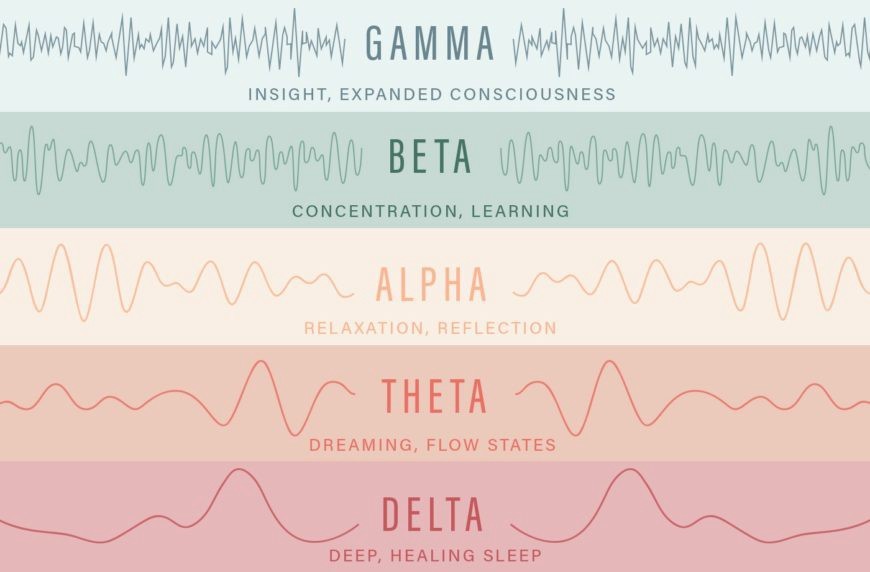
Delta (0.1-4 Hz): Subjective feeling states: deep, dreamless sleep, non-REM sleep, repair trance, unconscious
Theta (4 – 8 Hz): “slow” activity It is seen in connection with creativity, intuition, daydreaming/dreamlike state, fantasising and is a repository for memories, emotions, and sensations. There can be a sense of “oneness”, or “knowing” in this state.
Alpha (8 – 12 Hz): Good healthy alpha production promotes mental resourcefulness, aids in the ability to mentally coordinate, enhances overall sense of relaxation and fatigue. Alpha is a common state for the brain and occurs when a person is alert but not actively processing information. When Alpha predominates most people feel at ease and calm. Alpha also appears to bridge the conscious to the subconscious.
Beta (above 12-30 Hz): ‘fast’ activity. The brain is aroused and actively engaged in mental activities. It is the state that the brain is in most when we have our eyes open and are listening and thinking during analytical problem solving, judgment, decision making, and processing information about the world around us.
- Low Beta (12-15HZ): relaxed yet focused, integrated.
- Mid Beta (15-18hz): thinking, aware of self & surroundings. Associated with mental activity – alert, active, but not agitated.
- High Beta (18-30hz): Very focused. Associated with high mental activity (e.g. math, planning), high degree of alertness, general activation of mind & body functions. However, overactivity can lead to agitation and anxiety.
Beta waves are high-frequency, low-amplitude brain waves that are commonly observed in a waking state. They are involved in conscious thought and logical thinking, and tend to have a stimulating effect. Having the right amount of beta waves allows us to focus.
Gamma (30 to 100 Hz): Insight, peak experiences, synchronisation, learning, problem solving
Systems affected by Sleep
Brain and Nervous System
- The hypothalamus acts as the body’s master circadian clock, regulating the sleep-wake cycle, it responds to light and dark
- If you are awake for 2 hours between the hours of 10pm-4am, for 2 days a week for 25 days a year your body reacts like you are a shift worker which has increased risks for metabolic disfunction, cancer, cardiovascular, mental, dopamine and fertility issues.
- The brainstem, controls transitions between wakefulness and sleep states
- The pineal gland produces melatonin, a hormone that regulates the sleep-wake cycle and circadian rhythms
- Neurotransmitters like serotonin, dopamine, norepinephrine, and adenosine influence sleep-wake regulation and sleep drive.
Endocrine System
- The pituitary gland releases hormones like growth hormone and prolactin during sleep, which are important for tissue repair and other restorative processes
- Cortisol, a stress hormone released by the adrenal glands, can disrupt sleep if levels are elevated at night
- Thyroid hormones play a role in regulating sleep and circadian rhythms.
Respiratory System
- Sleep apnea and other breathing disorders can significantly disrupt sleep quality and lead to frequent awakenings.
- Stress influencing shallow breathing will decrease the amount of oxygen in the body and the repair of the tissue
Cardiovascular System
- Changes in heart rate, blood pressure, and blood flow occur during different sleep stages, reflecting the body’s restorative processes.
- Slower heart rate and lower blood pressure can decrease the amount of toxins eliminated during the night
Musculoskeletal System
- Muscle tone decreases during REM sleep, leading to temporary paralysis, while non-REM sleep is important for muscle repair and growth
Immune System
- Sleep and the immune system are directly linked, with sleep deprivation immune function in impaired and immune response (like during illness) affects sleep quality.
Mastering Sleep
Sleep Expert Dr. Michael Breus breaks down the 4 chronotypes to master your sleep, how to fix insomnia, the truth about sleep apnea, choosing the right pillow, jet lag, dreams, couples sleep, melatonin, snacking, ageing grumpiness, sleep trackers and much more.
Sleep Tips
Environment
- To get the best sleep and particularly if you are EMF sensitive, turn WIFI, phones, TV and other electrical devices off an hour before going to sleep or put in another room outside the bedroom. Or get a faraday bag and/or phone harmonisers for your phone and gadgets.
- Set up your house with ethernet cables and turn WIFI off permanently.
- Change your phone and computer screen settings from blue light to orange light at 7pm and/or wear orange tinted glasses an hour before bed.
- Sleep on a grounding sheet
- If you are too hot or static filled with polyester sheets, try cotton or linen.
- Darken the bedroom from external light as much as possible – blackout curtains
- Ensure your room is cooler in temperature, you will sleep better.
- Use a fan and/or white noise machine
- Make sure your mattress and pillows are comfortable and supportive – your nose should be parallel to your bed when sleeping on your side.
Consistent Sleep Schedule
- Stick to a regular schedule, by going to bed and getting up at the same time each day. (10pm-7am)
- Set an alarm at both ends of the day when to sleep and when to rise to help regulate your body clock.
- Aim for 7-9 hours sleep a night
- Sleep Drink Breathe Plan PDF by Dr. Michael Breus. A three week plan for waking, mid morning, post lunch, pre dinner and pre bedtime with times for each chronotype – lion, bear, wolf or dolphin.
- Chronoquiz.com to find out your chronotype – when you are naturally inclined to do your best sleep, work, exercise and more.
Relaxing bedtime routine
- Take a warm shower or bath with epsom salts
- Meditate, read and journal.
- Write tomorrows to-do list so you can rest easy
- Practice gratitude
- Gentle stretching and breathing techniques
- Drink warm herbal tea or golden milk
- Tart cherries (Montmorency) have high melatonin and tryptophan, an amino acid used in production of serotonin and melatonin. If fruit is in season, have 1/2 cup cherries an hour before bedtime or 1/2 cup cherry juice if they are out of season.
- Put on a sleep meditation – meditation by Marisa Peer
- Lie in a comfortable position, breathe deeply 5 times and count from 1 to 20. Before you reach the count of 20, you will go into a normal restful sleep.
- Sleep reset foot scrub
Adopting better sleep habits
- If you are easily stimulated by caffeine, don’t drink coffee, tea, green tea or eat chocolate after 4pm
- Limit day time naps to no more than 30 min.
- Stage 4 sleep (deep sleep) is crucial for brain health, as it supports the removal of toxins from the brain, including amyloid-beta, a protein linked to Alzheimer’s disease when in excess.
- Don’t take b vitamins at night if you want to sleep, they are best taken in the morning.
- Taking magnesium at night can help calm the system and help with leg cramps.
- Magnesium absorption works better with calcium
- Try not to go to bed full or on an empty stomach, low blood sugar can wake the body up.
- When you consume sugar, your body releases insulin to process it. Elevated insulin levels can interfere with the normal circadian rhythm and reduce the brain’s ability to produce melatonin, making it harder to fall asleep if sugar is consumed close to bedtime.
- Make sure you have adequate protein and healthy carbs. Try eating a small protein snack before bed and avoid high histamine foods.
- Don’t exercise within 3hrs before bedtime
- Don’t read or watch anything stimulating or stress inducing like horror movies or work documents.
- If you want to keep track of the quality of your sleep the Healy watch can record sleep phases.
- Make sure your hormones are balanced as menopause and progesterone deficiencies can play havoc with sleep quality.
- Alcohol may help you fall asleep faster, but it suppresses your deep and REM sleep, crucial for memory, learning, and emotional balance. Alcohol also relaxes the throat muscles, increasing the chances of snoring and sleep apnea, and leaving you tired and less refreshed the next day.
- If you are suffering from insomnia, snoring or sleep apnoea, a Buteyko Breathing coach can help.
- Don’t go to sleep on an argument
- Avoid watching the clock if you can’t fall asleep as this can add to anxiety and worry that you will not get enough sleep.
- If you can’t fall asleep in 20 mins, try getting up and doing something relaxing like reading a book, meditation or run a Healy program.
- Sleep issues after 45 – this goes over hormones, blood sugar, inflammation and has a protocol checklist to work from.
- Parasites can cause sleep issues – particularly waking in the night, so if there are other symptoms like fatigue, gritting teeth, itchy bottom, abdominal upsets etc, look into a parasite cleanse.
- Dream Dictionary for those with hard to decode dreams
- One of many ascension symptoms is waking at night
Programs to try
- Reduce stress. The bed rest program can be used to calm the sympathetic system into a parasympathetic, calming response via the vagus nerve with ear clips or sticky pads applied to the mastoid bone behind the ears. Run this at least 5 hours before bed time.
- The insomnia program is no.6 in pain/local stimulation
- If your circadian rhythm is really out of whack, the natural cycle is great.
- Healys Holistic Sleep Duo – sleep mask and individualised sleep program recommendations
- Digital Nutrition – Sleep, recreation
- Gold – Relax, Being, Balance
- Bioenergetic Vitalisation – Pineal Gland Harmony
- The Demo Experience has sleep as one of the 7 day goal choices
- The Power of Three protocol with a parasite cleanse
- Water can have the MagHealy water sleep program applied to drink earlier in the day, preferably before 6pm.
- Run the Sleep program overnight in the MagHealy atmosphere application on position II without charging to conserve battery power, using a very low intensity. This balances the ying and yang of the body.
- Alternatively you can run the MacMakin Sleep program once a day at 70-100% intensity for at least 36 minutes, as instructed on page 5 of the MagHealy manual. This will be just as effective as running the Sleep atmosph program throughout the entire night. It works on balancing negative influences.
- MagHealy – (classic) tiredness, sound of silence, (atmosph) sleep, (water) sleep, kidneys, Vagus Harmony (McMakin) sleep, emotions, Vagus Harmony, Kidney Harmony
Sleep Rejuvenation – 1 Week
| Day | Program Group | Program |
|---|---|---|
| Mon | Job/Sleep | Sleep Systemic |
| Tues | Job/Sleep | Balanced Sleep |
| Wed | Gold | Relax |
| Thurs | Fitness | Deep relaxation |
| Fri | Meridians 2 | Kidney |
| Sat | Deep Cycle | Pure Calm |
Fitness Scientist explains our Circadian Rhythm
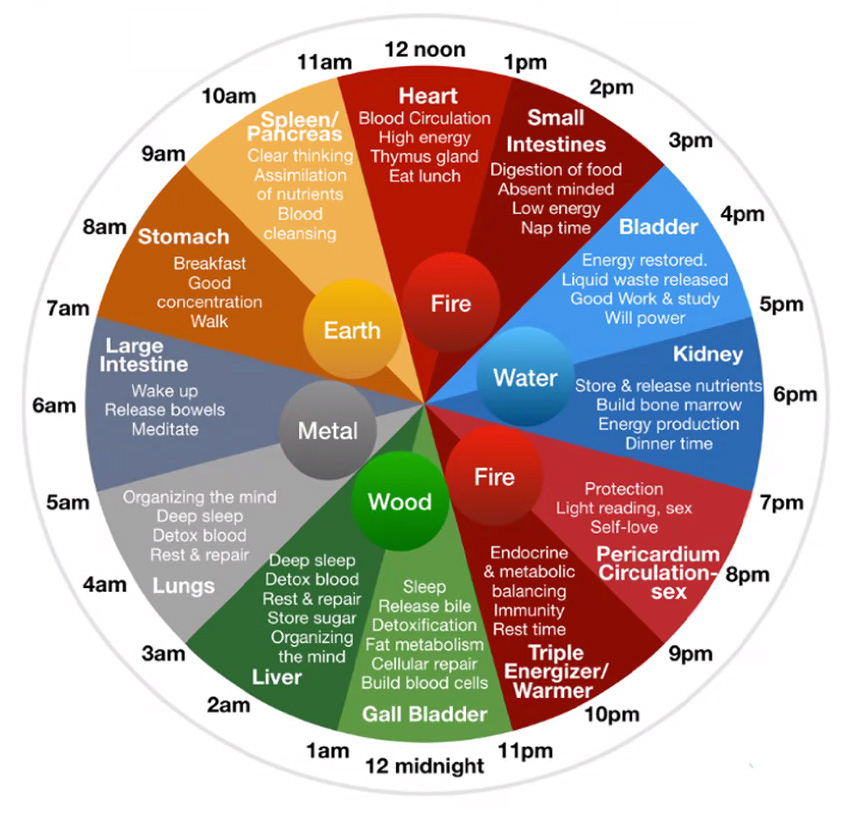
Internal meridians body clock
If you are waking up at specific times in the night – this body clock may give you other indications to different parts of the body as to why your sleep can be off. If you are not stressed, sometimes magnesium and melatonin can help, or solving blood sugar imbalances. Your best nights sleep will occur if you can be asleep before 10pm.